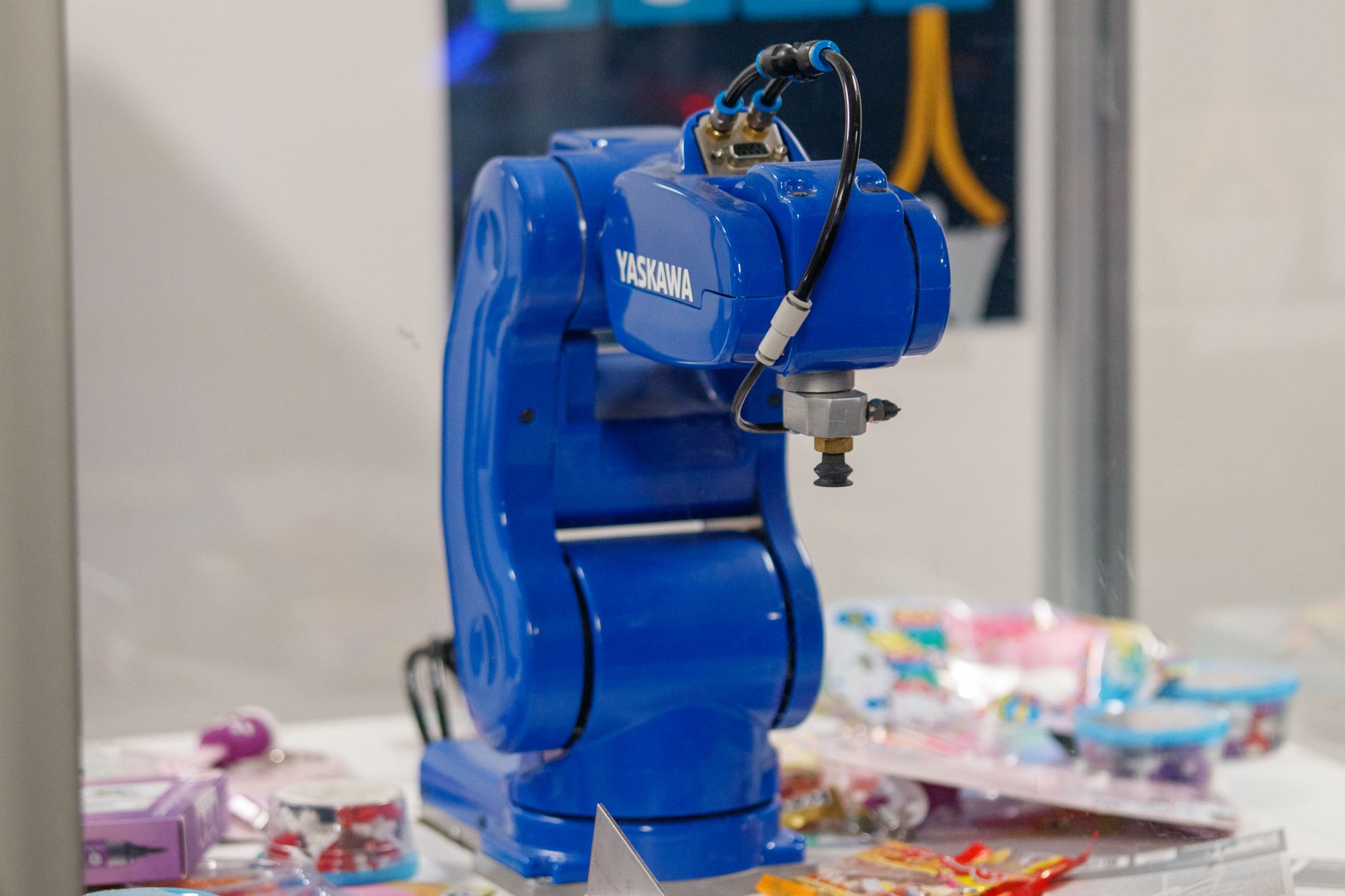
Every robot arm and AMR vendor at the last couple of trade shows has some version of the same slide now: a picture of a neural network, the words “foundation model,” and a demo video of a robot picking an object it’s never seen before. The pitch is that the same kind of large-model breakthrough that gave us ChatGPT is now happening for physical manipulation — vision-language-action (VLA) models that take in camera images and a plain-language instruction and output motion commands, instead of requiring an engineer to hand-code a trajectory for every SKU.
Some of this is real. Some of it is a research demo wearing a sales blazer. If you’re a controls engineer or plant IT lead getting this pitch, the job right now isn’t to decide whether physical AI is the future — it probably is, in some form. The job is to figure out what’s actually safe and sane to put in a work cell this year, versus what belongs in a vendor’s innovation lab for another cycle or two.
What a robot foundation model actually is
Traditional industrial robot programming is deterministic: you teach or code exact waypoints, the robot repeats them, and anything outside the expected envelope faults out. That’s why classic robotics is so reliable in high-volume, low-variation work — welding the same joint, palletizing the same box, a thousand times a shift.
VLA models flip the approach. They’re trained on large datasets of robot demonstrations (and increasingly, video and simulation data) to learn a general policy for perception-to-action mapping, then fine-tuned for a specific task or cell. Instead of programming exact motion, you show examples, or you type an instruction like “pick up the connector and place it in the tray,” and the model figures out the trajectory from what it sees. In principle, that means less integration time for high-mix work and more graceful handling of parts that shift position or vary slightly in shape.
That’s a genuinely different capability from classic pick-and-place vision guidance, which has existed for years using deterministic template matching or classical machine learning. The foundation-model pitch is generalization: one trained policy that adapts across tasks and part variation without a re-teach cycle for every new SKU.
What’s real today versus what’s still lab-grade
Generalization is also exactly where the hype outruns the hardware. A few honest distinctions matter here.
Bin picking and unstructured picking of known part families is the area where foundation-model-style vision and grasping are furthest along and genuinely usable in pilot form. Vendors have been shipping learned-grasp systems for years; what’s new is folding that into a broader model that also handles some language-conditioned task switching.
Language-instructed task changes — telling a cell “now pack the blue variant instead” without a re-teach — are demoable and improving fast, but still fragile outside curated conditions. Lighting changes, clutter, reflective parts, and novel occlusions still trip these systems up more than a scripted demo suggests.
Mobile robot navigation and fleet coordination has arguably absorbed foundation-model techniques more successfully than manipulation has, because the perception problem (mapping, obstacle avoidance, dynamic replanning) is a better match for the data these models are trained on, and the failure mode (stop and wait) is far less consequential than a manipulator making an unexpected motion near a person.
End-to-end, model-driven motion planning with no deterministic safety layer underneath is not ready for a production cell, full stop. Every credible deployment right now still wraps the learned policy in conventional safety-rated motion limits, collision detection, and often a classical planner that the model’s output has to pass through. If a vendor pitches a foundation model with no such layer as “safe by design,” that’s the point to push back hardest.
The infrastructure question nobody puts on the pitch deck
The demo video always shows the model working. What it doesn’t show is what has to exist behind it in your plant before that model is trustworthy in your cell, with your parts, on your line.
- Representative training and validation data. A model fine-tuned on a vendor’s lab bin of parts needs re-validation, and often re-training, against your actual parts, your actual lighting, your actual fixturing. Skipping this step is the single most common way pilots quietly underperform.
- A real safety architecture, not a policy promise. IEC 62443-style network segmentation for the compute stack, plus conventional robot safety standards (ISO 10218, ISO/TS 15066 for collaborative applications) still apply in full. A learned policy driving motion is a new input to the safety system, not a replacement for it.
- Fallback and failure handling. What happens when the model’s confidence is low, or its output is out of expected range? You need a deterministic answer — stop, hold, alert — not “the model will probably figure it out.”
- Traceability back to MES. If a robot’s behavior is now probabilistic rather than fully scripted, your quality and genealogy records need to capture what the model actually did on a given part, not just that “the robot cycle completed.” That’s a new kind of event data your MES and historian may not currently be schema’d for.
- Compute and connectivity. Larger models often need edge GPU compute near the cell, plus a clear answer on whether inference runs locally or depends on a vendor cloud — with everything that implies for latency, uptime, and data leaving your network.
A checklist for scoping a bounded pilot
The right move for most plants in the current cycle is a deliberately small, bounded pilot — not a line rollout, and not a “let’s just try the demo cell” leap either. Before you commit floor space and engineering hours, work through this:
- Pick a task with high mix and low consequence of failure. Kitting, unstructured picking, or low-force assembly of non-critical components is a better first target than anything with tight torque specs or safety-critical fastening.
- Define the part envelope explicitly. What variation in size, orientation, reflectivity, and clutter will the pilot actually cover? Write it down before you start, and don’t let scope creep expand it mid-pilot.
- Demand a data plan, not just a demo. Ask the vendor exactly how much of your own part and cell data is needed to fine-tune the model, who owns that data, and where it’s stored.
- Keep a deterministic safety envelope underneath the model. Hard motion limits, e-stop behavior, and collision response should not depend on the learned policy behaving correctly.
- Set a measurable exit criterion. Pick success/failure rates and a cycle-time band that determine whether this graduates to a wider deployment or gets shelved. Don’t let a pilot run indefinitely on vibes.
- Instrument it for your own systems, not just the vendor’s dashboard. Make sure model decisions, confidence scores, and exceptions are logged somewhere your MES or historian can actually query later.
- Budget for retraining, not just deployment. Foundation models drift as parts, lighting, and processes change. Treat model maintenance as an ongoing line item, the way you’d treat calibration or PM, not a one-time integration cost.
Where this is actually headed
The trajectory is toward robots that need less painstaking per-SKU programming and handle variation more gracefully than classical vision-guided automation — that part of the pitch is directionally sound, and it maps to a real research trend that’s been building for years. What’s not yet true is that you can hand a foundation model the keys to a production cell and skip the safety and data engineering that made industrial robotics trustworthy in the first place.
Treat 2025 and 2026 vendor pitches as an invitation to run a real, bounded pilot with hard exit criteria — not as a signal that programmed motion planning is obsolete. The plants that get value out of this wave will be the ones that pilot narrowly, instrument carefully, and let the results — not the demo reel — decide what comes next.
This article was written with the assistance of artificial intelligence. While we aim for accuracy, the information may be incomplete, out of date, or incorrect, and should be independently verified before you rely on it for any decision. It is provided for general information only and does not constitute professional advice.